In the current digital world, it is essential to ensure that your applications are secure and protected. That’s where Aqua Trivy comes in handy. It’s widely used in the DevSecOps pipeline to examine security issues in Docker images and scan your infrastructure for potential threats and misconfigurations.
According to Statista, over 77% of organizations had already adopted DevSecOps practices in 2022 to enhance their security measures.
With that said, let’s take a deeper look at Aqua Trivy.
What is Aqua Trivy?
Trivy is an open-source security scanner developed by Aqua Security. Over the past few years, it has gained popularity, especially among DevSecOps professionals. That’s mainly because it can enhance security measures throughout the software development lifecycle.
One of Trivy’s standout features is its ability to examine security issues in Docker images. It’s like having a magnifying glass that spots potential threats before they become problems. But Trivy doesn’t stop there. It also searches your entire infrastructure, identifying potential threats and misconfigurations in your Kubernetes manifests.
So, whether you’re just starting with containerized applications or a seasoned DevOps professional, integrating Trivy into your pipeline can give you peace of mind. This way you can rest assured that your applications are being continuously monitored for vulnerabilities.
Use Cases of Aqua Trivy
Some of the primary use cases of Trivy are:
Vulnerabilities Scanning of Docker Images
Aqua Trivy is commonly used to scan vulnerabilities from container images, which is crucial because containerized applications often rely on numerous dependencies that may have known security issues.
This comes with various key features:
- Comprehensive Vulnerability Database(CVD): Trivy scans container images against a comprehensive vulnerability database, including data from sources like NVD, Red Hat, Debian, Ubuntu and Alpine etc.
- Speed, Efficiency and Optimization: It is fully optimized and designed to be fast and efficient, making it suitable for CI/CD pipelines where quick feedback is essential.
- Reporting: Aqua Trivy provides detailed reports highlighting vulnerabilities, their severity levels, Common Vulnerabilities and Exposure(CVE )identifiers, and recommended remediation steps.
- Integration in CI/CD Pipelines: Trivy can be integrated into CI/CD pipelines to ensure every build is scanned for vulnerabilities before deployment. Integration can be done using various CI/CD tools, such as Jenkins, GitLab CI, CircleCI, GitHub Actions, and more.
Scanning Infrastructure
As DevOps evolved over time, so did Trivy. Now, Trivy is also widely used for scanning your Infrastructure file to highlight security misconfiguration and compliance issues. IaaC is the set of practices for managing and provisioning computing resources through machine-readable configuration files rather than manual processes.
It allows for consistent, automated, and repeatable deployment of infrastructure, enhancing efficiency and reducing the risk of human error.
Supported Iaac Types
- Terraform: Scans Terraform files for potential misconfiguration.
- Kubernetes(k8s): Scans k8s manifests for best practice violations and security risks.
- AWS CloudFormation: Analyzes AWS CloudFormation templates for security issues.
Benefits
- Proactive Security: Detects threats early in the development process, blocking insecure configurations from being applied.
- Compliance: Verify that IaaC configurations stick to organizational policies and industry standards.


DevSecOps at Venturenox
The diagram above shows the CICD pipeline flow and how Venturenox uses security as part of its DevOps. We have security checks and different types/stages of testing in our pipelines to make the infrastructure robust and reliable.
We use Drone ci as our pipeline tool, which has different stages. The first stage consists of building the images and passing the trivia check (for image vulnerability and scanning the infrastructure).
After going through unit testing, deployment on Kubernetes starts, and after deploying, integration tests and end-to-end tests run through the application.
A breakdown of the process is as follows:
Code Commit
Developers start by writing code and creating Infrastructure as Code (IaC) configurations. They then commit these changes to a version control system like Git. This is the first step in tracking changes and ensuring that the code and configurations are ready for the following stages.
CI/CD Pipeline
Build Stage
The continuous integration/continuous deployment (CI/CD) pipeline automatically kicks off when changes are committed. The pipeline initiates a build process that compiles the code and creates container images. These images package the application and its dependencies.
Scan Stage
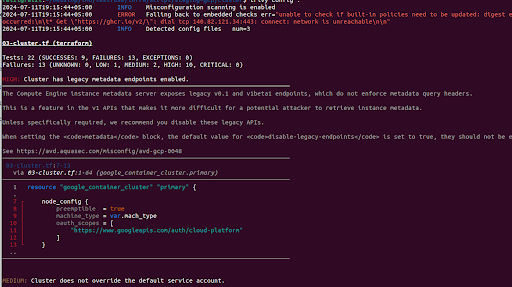
After building the container images, Trivy scans them for vulnerabilities. This step helps identify any security issues in the images before they are deployed.
Command example: trivy image my-app:latest
IaC Scan Stage
Trivy also scans IaC files for misconfigurations. This ensures that the infrastructure settings are secure and compliant with best practices.
Command example: trivy config –security-checks config path/to/iac/files
Report Generation
Trivy generates a detailed report based on its scans. This report outlines the vulnerabilities and misconfigurations it has found, providing valuable insights for developers.
Remediation
Developers review the reports generated by Trivy. They prioritize the vulnerabilities based on their severity and work on fixing them.
Once the necessary fixes are applied, they commit the updated code and configurations back to the version control system.
Re-Scan
The CI/CD pipeline runs again, this time scanning the updated container images and IaC files to ensure all previously identified issues have been resolved. This step is crucial for verifying that the fixes were successful.
Deployment
After confirming that the scans are clean and all issues have been addressed, the pipeline deploys the application to the production environment. This final step ensures that the application is secure and ready for users.
What’s next?
Trivy by Aqua Security is a standout tool in the modern DevSecOps landscape. Trivy checks Docker images and scans infrastructure files like Terraform, Kubernetes manifests, and AWS CloudFormation templates. This versatility makes it an essential part of any security toolkit.
What sets Trivy apart is its thorough vulnerability database which ensures detailed analysis and quick feedback. This makes it perfect for integrating into CI/CD pipelines, where speed and accuracy are crucial.
Trivy’s proactive approach helps identify security threats and ensures compliance with organizational standards, keeping your applications and infrastructure safe from potential risks.
Want to learn more about DevSecOps or cloud services? Head over to our services page or contact us here.